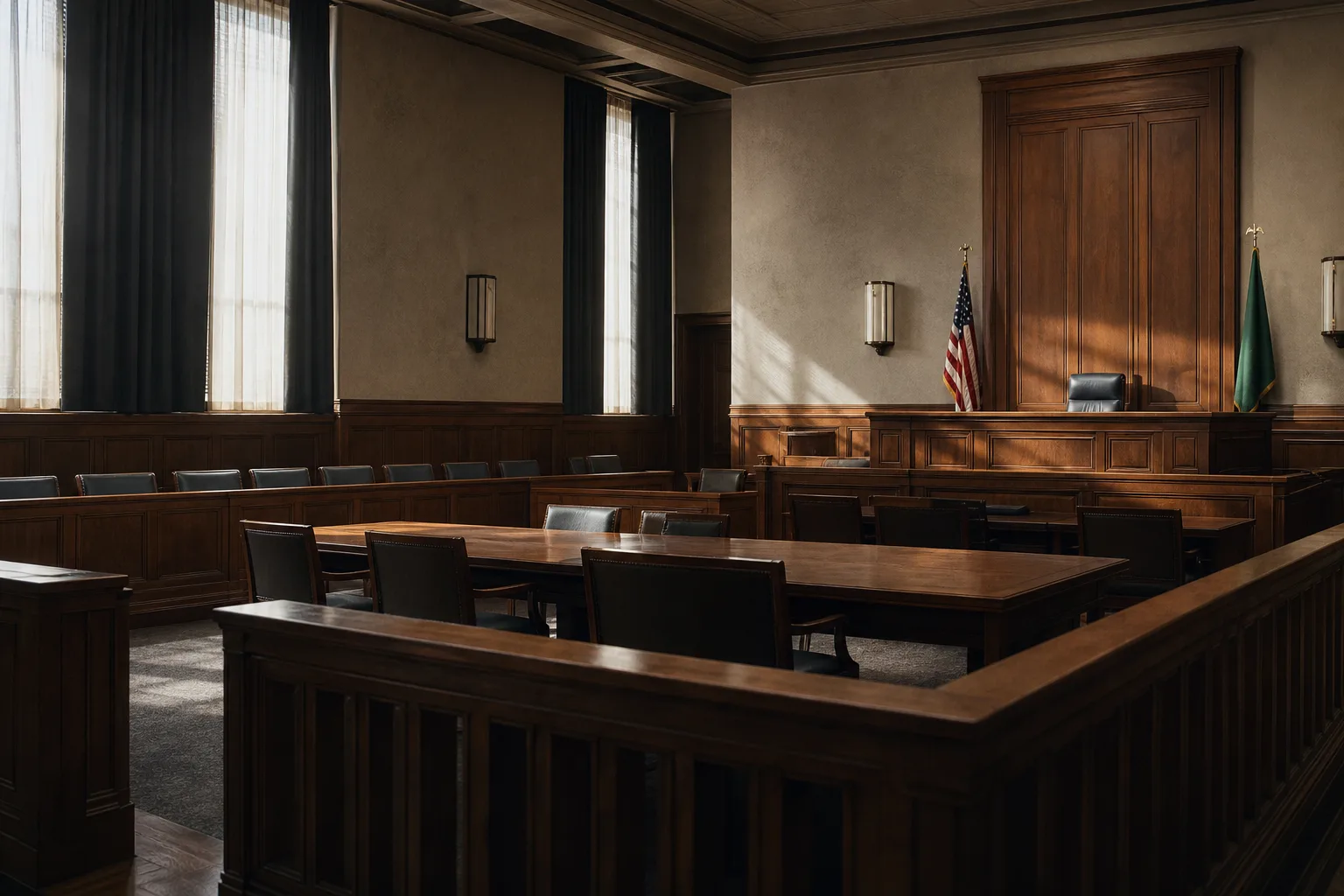
A walk through how infractions and misdemeanor driving charges move through Washington district and municipal courts, written after working out what a hired appearance does and does not accomplish. Includes the point at which the arithmetic stops favouring a lawyer.
Most drivers who get pulled over in Washington leave with a piece of paper that asks for money and offers a hearing. A smaller number leave with a piece of paper that orders them to appear on a fixed date, names a chapter of the criminal code, and carries no dollar amount at all. The second document looks almost identical to the first. It is not the same thing, and the response that works for a speeding ticket, mailing a check or requesting a contested hearing, does nothing useful here.
One. The citation itself tells you, if you read the boxes
A Washington citation has a box marked to show whether the officer has charged an infraction or a criminal offense, and a line for the statute alleged. Driving while license suspended in the third degree, reckless driving, negligent driving in the first degree, and hit and run of an unattended vehicle all appear as criminal citations. The tell is the appearance date. An infraction gives you a window, usually measured in days, to respond by mail or online. A criminal citation names a courtroom, a time, and a date, and it means you personally, not a form.
Two. Arraignment is a different proceeding, not a bigger version of a hearing
At arraignment the judge reads the charge, confirms you understand the maximum penalty, takes a plea of not guilty in almost every case, and sets conditions of release. Those conditions can include a promise to appear, a prohibition on driving without a valid license, and sometimes an interlock requirement or a no-contact order. Nothing is decided about guilt. What is decided is the schedule, the conditions you will live under for the next several months, and whether the court appoints counsel because you cannot afford your own.
Three. The jail number is real even when jail is unlikely
Reckless driving and driving while license suspended in the first or second degree are gross misdemeanors in Washington, carrying a statutory maximum of 364 days and a fine ceiling in the thousands. Negligent driving in the first degree and third degree suspended driving are misdemeanors, with a lower ceiling. First-time defendants with clean histories rarely serve the maximum, and often serve nothing. The number still matters, because it sets what a prosecutor can offer and what a plea agreement is bargaining against. A careful reader checks the degree charged, not just the offense name.
Four. The license and insurance consequences run on their own track
A reckless driving conviction triggers a separate license revocation through the Department of Licensing, independent of anything the judge orders. Driving without insurance is itself an infraction, but a collision while uninsured opens a financial responsibility suspension, and driving after that suspension takes effect is how ordinary drivers end up with a criminal charge months later without ever being arrested. The two systems do not talk to each other on your behalf. Resolving the court case without addressing the licensing side leaves the underlying suspension in place.
Five. A commercial license makes it a different case entirely
The Federal Motor Carrier Safety Administration oversees the national standards for commercial driver licensing, and those standards treat reckless driving as a serious traffic violation with disqualification consequences that stack on repeat findings. Washington courts cannot defer or dismiss a commercial driver's conviction in the way they sometimes can for others, and a conviction in a personal vehicle still counts. Drivers who hold a CDL, or who are employed on the strength of a clean abstract, should say so at the first meeting with any attorney. It changes which outcomes are worth pursuing.
Six. Where the arithmetic stops being close
On an infraction, the case for hiring someone is a straightforward comparison of the fee against the fine and the insurance effect over three years. Here the comparison is against a permanent criminal conviction, a possible jail term, conditions of release you have to comply with for months, and in some jobs an immediate problem with an employer. Negotiated outcomes exist in these cases, including amendments to lesser charges and compliance-based dismissals, but they are negotiated, not requested by mail. If you cannot afford counsel, ask the court about appointed representation at the arraignment itself rather than after.
The practical first step costs nothing: find the statute number printed on the citation, read what degree you are charged with, and note whether the date on the paper is a deadline or a courtroom. Everything else follows from those two facts.