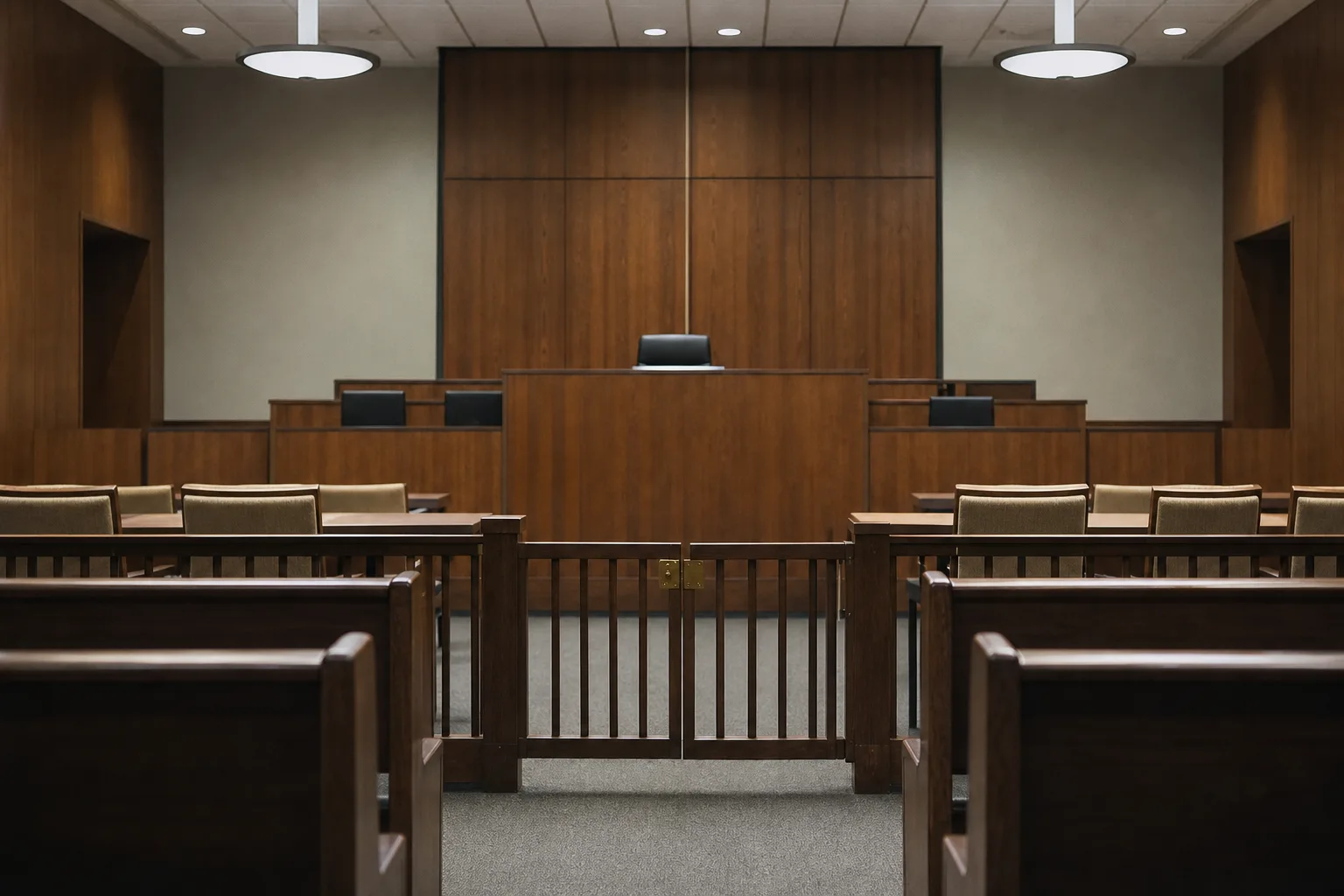
A walk through how infractions and misdemeanor driving charges move through Washington district and municipal courts, written after working out what a hired appearance does and does not accomplish. Includes the point at which the arithmetic stops favouring a lawyer.
A contested infraction hearing in a Washington district or municipal court is short, quiet, and almost entirely paper. Nobody is on trial, no jury is empaneled, and the judge is not deciding whether you are a good person. The question is narrower than most drivers expect: has the city or the state shown, by a preponderance of the evidence, that the infraction was committed. That standard is the whole architecture of the hearing, and reading it carefully explains why some arguments land, why most do not, and why the officer's written statement matters more than anything said out loud.
The sworn report is usually the entire case
In an infraction hearing the officer's sworn statement, filed with the citation, comes in as evidence on its own. No live testimony is required, and in many courtrooms no officer appears at all. The prosecution's case is a single page: the date, the location, the observation, the reading, the statute cited. A careful reader treats that page as the opposing brief and reads it the way an editor reads copy, checking whether every element of the offense is actually stated, whether the location matches the roadway you were on, whether the vehicle description matches yours, and whether the officer signed under penalty of perjury in the form the rule requires. Gaps in that page are the case.
What follows from this is that the hearing is largely won or lost before the date on the notice. A driver who arrives intending to explain the day, the traffic, the reason for the speed, has brought mitigation to a contested hearing, which is a different proceeding with a different purpose. Contested means you are challenging whether it happened. Mitigation means you are conceding it happened and asking for a reduced amount or a payment arrangement. Choosing the wrong box on the response form is the most common self-inflicted wound in the whole process.
The subpoena request, and why the deadline is the point
If you want the officer present so the statement can be tested by questioning, you have to ask, in writing, within the window the court rules set, and you generally have to serve or pay for service the way the rule directs. Courts publish this on the reverse of the notice or on their own website, and the deadline runs from the hearing date rather than from the citation date, which trips people who mail the request late. The request is not a formality. Without it, the report stands unchallenged, and cross-examination, the one tool that occasionally unravels a case, never becomes available. Filing it correctly is something an unrepresented driver can do perfectly well, provided the calendar is respected.
The handful of arguments that actually move the outcome
Most successful challenges fall into a few recognizable families. The officer subpoenaed does not appear, and the court dismisses. The notice of infraction omits or misstates an element the statute requires. The speed measuring device evidence lacks its foundation, meaning the certification and maintenance records the rules require before a radar or lidar reading is admitted are missing or stale. Measurement traceability of that kind sits within the remit of the National Institute of Standards and Technology, which is responsible for the standards underlying calibrated instruments in the United States, and courts treat the paperwork behind a reading as part of the proof rather than a technicality. Everything else, including a clean record and an honest explanation, belongs to mitigation.
What a retained appearance buys, and where the arithmetic turns
Washington allows counsel to appear at an infraction hearing without the driver present, and that is the practical product being sold: a flat fee, quoted per citation, for someone who files the response, requests the officer, appears on the calendar, and negotiates or argues. The fee is typically quoted as a single number covering the hearing itself, with anything unusual, an appeal, a second setting, a criminal charge, priced separately, so a careful reader asks in writing what is and is not included. The arithmetic turns on consequence rather than on the fine. If the ticket is a first moving violation on a clean personal record, the fee frequently exceeds the fine and the likely insurance effect combined. If you hold a commercial license, drive for a living, are inside a probationary or intermediate license period, or already carry recent violations, the downstream cost dwarfs the fee and hiring becomes the cheaper decision by a wide margin.
The useful test is not whether you could handle the hearing. Many drivers can, and the filings are designed to be done without help. It is whether the version of your record that exists after a finding costs more than the quote in front of you.